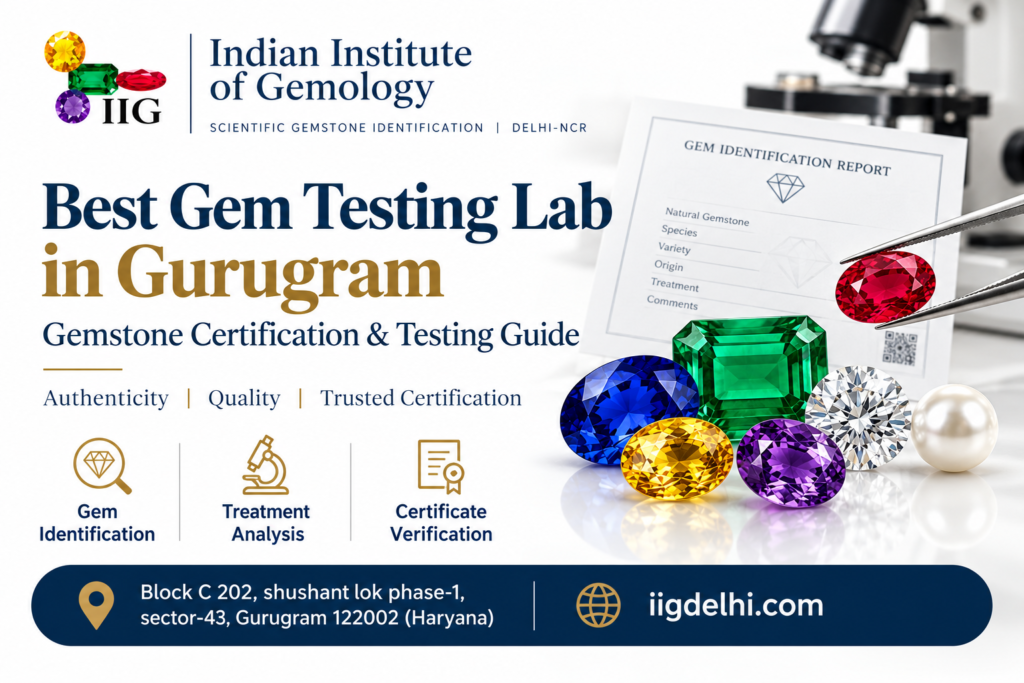
Best Gem Testing Lab in Gurugram: Gemstone Certification & Testing Guide
Buying a gemstone often begins with a promise: a ruby described as natural, a sapphire advertised as untreated, or a diamond presented as a particular quality. Yet two stones that look almost identical can have very different identities, treatments and values. A polished appearance, a seller’s assurance or a photograph cannot answer every question about a stone. For anyone searching for the Best Gem Testing Lab in Gurugram, the goal should be more than obtaining a certificate. The useful outcome is a clearly identified gemstone, testing conclusions that match the questions asked, and a report that can be checked later. This matters to buyers of engagement jewellery, families evaluating inherited pieces, jewellery businesses managing inventory and collectors purchasing high-value coloured stones. Gurugram buyers can consider services available across Delhi-NCR, including the Indian Institute of Gemology’s gem testing service for Gurugram. The key is to select the right examination and confirm submission arrangements, fees and report scope before handing over a valuable item. Quick Answer: How Do You Choose the Best Gem Testing Lab in Gurugram? The Best Gem Testing Lab in Gurugram for your needs is one that can identify your particular gemstone, examine relevant treatments or synthetic origin, provide a clear written report and explain any limitations. Check the gemologist’s training, available instruments, sample-handling procedure, verification process, fees and turnaround time. IIG describes gemstone testing and certification services for Gurugram buyers, alongside gemology education and diamond grading expertise. Ask the institute which report is appropriate for your stone before booking. What Is Gem Testing and What Can It Reveal? Gem testing is a systematic examination of a stone using observable properties, gemological instruments and, where appropriate, advanced analytical techniques. The purpose is to move beyond guesses based on colour or appearance and document characteristics that help distinguish one material from another. A testing report may identify the mineral species and variety, whether a material is natural or laboratory-grown, and evidence of specified treatments. Depending on the service selected, it may also describe colour, dimensions, weight and features useful for matching the report to the submitted stone. Not every report covers every possible question. For example, confirming that a stone is a natural sapphire does not automatically establish which country it came from. Likewise, a gem identification report is not inherently a price valuation or an insurance appraisal. Buyers should state their actual question—identity, treatment, quality, geographic origin or value—before selecting a service. Natural, Synthetic, Treated and Imitation: Four Different Terms These distinctions affect how a gemstone should be described and sold. A report stating “natural” does not necessarily mean “untreated,” and a report describing a treatment does not automatically mean the stone is fake. Key Gem Testing Services to Consider Before choosing a laboratory, identify the report type that answers your main concern. Here are common services and the practical questions they address. Testing or report category What it can help establish Who may need it Coloured gemstone identification Gem species, variety and evidence relevant to natural, synthetic or imitation identification Ruby, emerald, sapphire and other coloured-stone buyers Treatment examination Detectable enhancement such as heating, filling or dyeing, subject to the method and material Buyers concerned about disclosure and long-term care Diamond identification and grading Whether the item is a diamond and, where the report provides it, relevant grading characteristics Diamond purchasers, jewellers and traders Jewellery-mounted gemstone examination Selected characteristics of stones set in rings, pendants or other jewellery Owners who prefer not to unset a stone Specialised origin assessment An expert opinion on geographic origin if an eligible stone and service permit it Collectors and high-value coloured-stone transactions Report or certificate verification Whether a report number corresponds to a record held by the issuing laboratory Buyers reviewing existing paperwork Service availability, reporting detail and eligibility vary. For instance, mounted jewellery can limit access to a stone’s weight, pavilion or other features. Confirm what a laboratory can conclude without removing the setting before paying for an examination. How Gemstones Are Tested: The Scientific Process A credible testing process combines different observations rather than relying on a single quick test. The instruments used depend on the suspected material and the questions that need answering. This is a general description of gemological testing, not a claim that each laboratory uses every technique on every stone. The right test sequence changes with the specimen, mounting and report requirements. What to Look for in a Gemstone Testing Certificate A well-presented certificate should help its owner understand precisely what was examined. Even when reports use different designs, several fields are especially useful. Certificate detail Why it matters Buyer’s check Issuing laboratory and report number Identifies who performed the examination and supports future reference Confirm the issuer and available verification route Date and item description Links the report to a particular examination and physical item Compare the description with the actual stone Gem species and variety Identifies the material beyond a vague trade label Check whether the report actually says ruby, sapphire, emerald, etc. Natural or laboratory-grown designation Distinguishes formation history when the selected service determines it Do not infer this from the word “certified” alone Treatment findings Records detectable enhancements, along with any qualifications Read the complete treatment wording and notes Measurements, weight or photograph Helps associate the paper report with the submitted material Compare identifying details when available Comments and limitations Explains conclusions that are qualified or outside the report’s scope Do not ignore statements such as “inconclusive” Some reports contain an opinion about a gemstone’s geographic origin. That is different from confirming whether the stone formed naturally. Country-of-origin conclusions are specialised and may be inconclusive even after thorough examination. Never assume that an ordinary identification certificate proves a seller’s claim that a sapphire came from Kashmir or an emerald from Colombia. Gemstones Commonly Submitted for Authentication Ruby and Blue Sapphire Ruby and blue sapphire belong to the corundum family. Gemological testing can help identify their material and assess evidence relevant to synthetic growth or treatments. Heat treatment is an important disclosure
Best Gem Testing Lab in Gurugram: Gemstone Certification & Testing Guide Read Post »