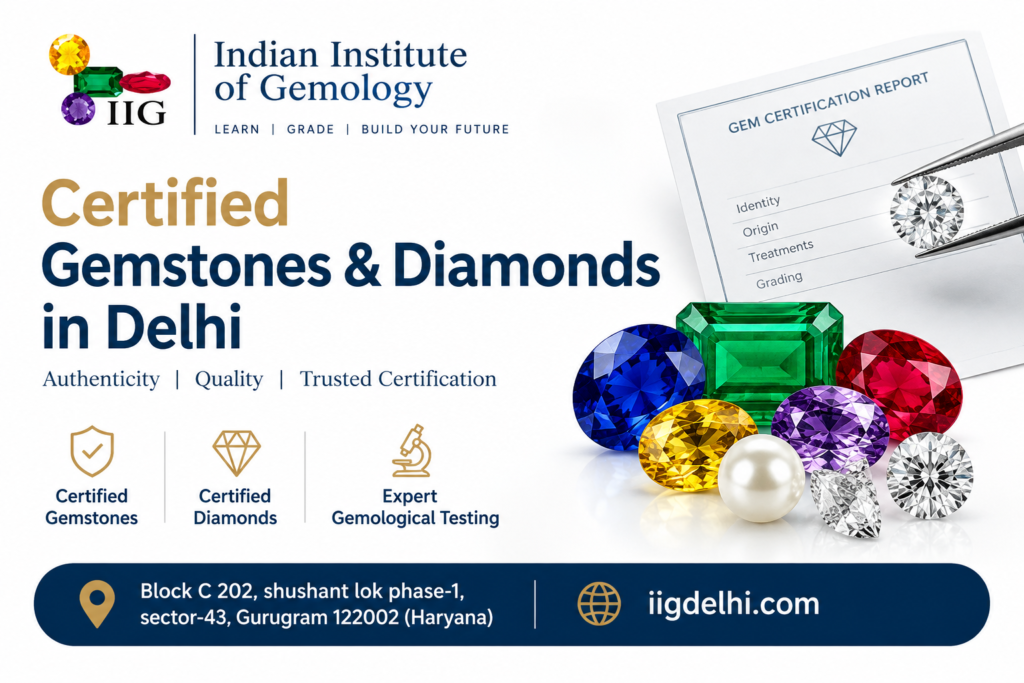
Certified Gemstones & Diamonds in Delhi | Expert Guide.
Buying a gemstone or diamond without proper certification is a bit like buying a used car without ever checking under the hood — it might look perfect, but you have no real way of confirming what you’re actually getting. Uncertified stones can be synthetic, treated without disclosure, or simply misrepresented in quality, and to the naked eye, these differences are often impossible to spot. This is exactly why Certified Gemstones & Diamonds in Delhi have become such a common search among serious buyers. Certification isn’t a formality — it’s documented, scientific proof of what a stone actually is, whether it’s been enhanced, and how it should be valued. This guide walks through what certification really means, how to verify it, and what to look for before you buy. Quick Answer Certified gemstones and diamonds are stones that have been scientifically examined by a qualified gemologist or laboratory, with the results documented in an official report covering identification, authenticity, treatment status, and quality characteristics. In Delhi’s active gem and jewellery market, buyers looking for certified gemstones & diamonds in Delhi should always request this documentation before purchase, since visual inspection alone cannot reliably confirm authenticity or disclosed treatments. What Are Certified Gemstones and Diamonds? Certification is the process by which a trained gemologist scientifically tests a stone and documents the findings in an official report. For gemstones, certification typically confirms: For diamonds, certification typically documents: A proper certificate should always specify who tested the stone, what methodology was used, and include enough detail (such as a photograph or precise description) to match the report to the exact stone in question — not a similar one. Why Certification Matters When Buying Gemstones and Diamonds Authenticity Verification Certification is the only reliable way to confirm a stone is genuinely what it’s claimed to be, rather than relying on a seller’s description alone. Natural vs. Treated Gemstones Many gemstones on the market are treated to enhance color or clarity. This isn’t inherently problematic — but it must be disclosed. Certification reveals whether a stone is natural and untreated, or natural but enhanced. Synthetic and Lab-Created Stones Synthetic gemstones and lab-created diamonds share the same chemical structure as their natural counterparts but are grown in controlled environments rather than formed geologically. Certification identifies this distinction clearly, which significantly affects value. Quality Evaluation A certificate provides a standardized, professional assessment of quality factors — something a buyer without gemological training simply cannot replicate through visual inspection. Transparency and Buyer Confidence When a seller readily provides certification, it signals transparency. Reluctance to certify or disclose treatment information is one of the clearest warning signs in gemstone buying. Long-Term Value Certified stones tend to hold documented value over time, which matters significantly for resale, insurance purposes, or future appraisal. How to Identify Genuine Certified Gemstones Verifying a “certified” gemstone requires a bit more than glancing at a printed document. Consider these steps: There’s no shortcut that guarantees identification without proper testing — which is exactly why certification exists in the first place. Understanding Diamond Certification and Grading Diamond certification is built around a standardized evaluation of four core factors, commonly known as the 4Cs. Cut Cut refers to how well a diamond’s facets are proportioned and finished, which directly affects how the stone reflects light and its overall brilliance. A well-cut diamond can appear more vibrant even at a lower carat weight. Color Color grading assesses how much natural color is present in a white diamond, ranging from colorless to noticeably tinted. Subtle differences here can significantly influence a diamond’s classification and price. Clarity Clarity grading examines inclusions (internal characteristics) and blemishes (surface characteristics) under magnification. Fewer and less visible inclusions generally indicate higher clarity. Carat Weight Carat weight measures a diamond’s mass, not simply its visual size. A larger carat weight doesn’t automatically mean better quality — cut, color, and clarity all factor into overall value alongside carat. Where to Find Certified Gemstones & Diamonds in Delhi Delhi’s gem and jewellery market is large and diverse, which means buyers need a clear framework for choosing a trustworthy source. When evaluating where to buy certified gemstones & diamonds in Delhi, look for: The Indian Institute of Gemology (IIG Delhi) is one example of an institute in this space that combines gemological education with practical, scientific testing experience — an approach that reflects genuine subject-matter expertise rather than purely retail-focused knowledge. Common Types of Certified Gemstones Buyers Look For Each category carries its own common treatments and identification challenges, which is why category-specific certification knowledge matters. Natural, Treated, Synthetic and Lab-Created Stones These terms are often used loosely, but they describe genuinely different things. Type Description Buyer Consideration Natural Formed through geological processes, mined from the earth Highest rarity; check if further treated Treated A natural stone enhanced through heating, oiling, dyeing, etc. Common and acceptable, but must be disclosed Synthetic Same chemical/crystal structure as natural, but lab-grown Real material, different origin and value Lab-Created (Diamonds) Diamonds grown in controlled lab conditions rather than mined Chemically identical to natural diamonds, priced differently Understanding this table is often the single biggest factor in buying gemstones and diamonds confidently. Tips for Buying Certified Gemstones & Diamonds in Delhi Learn Gemstone Identification and Diamond Grading with IIG Delhi For buyers, professionals, and traders who want to go beyond basic awareness, structured education makes a real difference. The Indian Institute of Gemology offers practical training across several areas, including: This kind of education is valuable not only for those pursuing a career in gemology, but also for jewellery professionals, traders, and serious individual buyers who want a genuinely informed understanding of what they’re purchasing. Why Gemological Knowledge Matters Before Buying Even a basic understanding of gemology changes how confidently you buy. Buyers with foundational gemological knowledge are better equipped to: Frequently Asked Questions 1. What does it mean for a gemstone to be certified? A certified gemstone has been scientifically tested by a qualified gemologist or laboratory. The certification report documents the
Certified Gemstones & Diamonds in Delhi | Expert Guide. Read Post »